At a busy exhibition, visitors walk past dozens of stands in an hour. Most blur together. A few make people slow down, step inside and stay — and some of those are remembered long after the event has ended.
Those memorable experiences are rarely the result of size or budget alone. They come from clear thinking about what visitors should feel, learn and do, and from design decisions that support that purpose at every step.
01 · PURPOSEStart with what the visit should achieve.
Every exhibition experience should begin with an objective. Is the goal to launch a product, meet partners, generate leads, build awareness or tell the story of a national project? Each objective leads to a different kind of space.
Defining the objective early also helps answer practical questions: how many visitors the space should welcome at once, which conversations need privacy, and what visitors should take away with them.
02 · ATTRACTIONEarn attention from a distance.
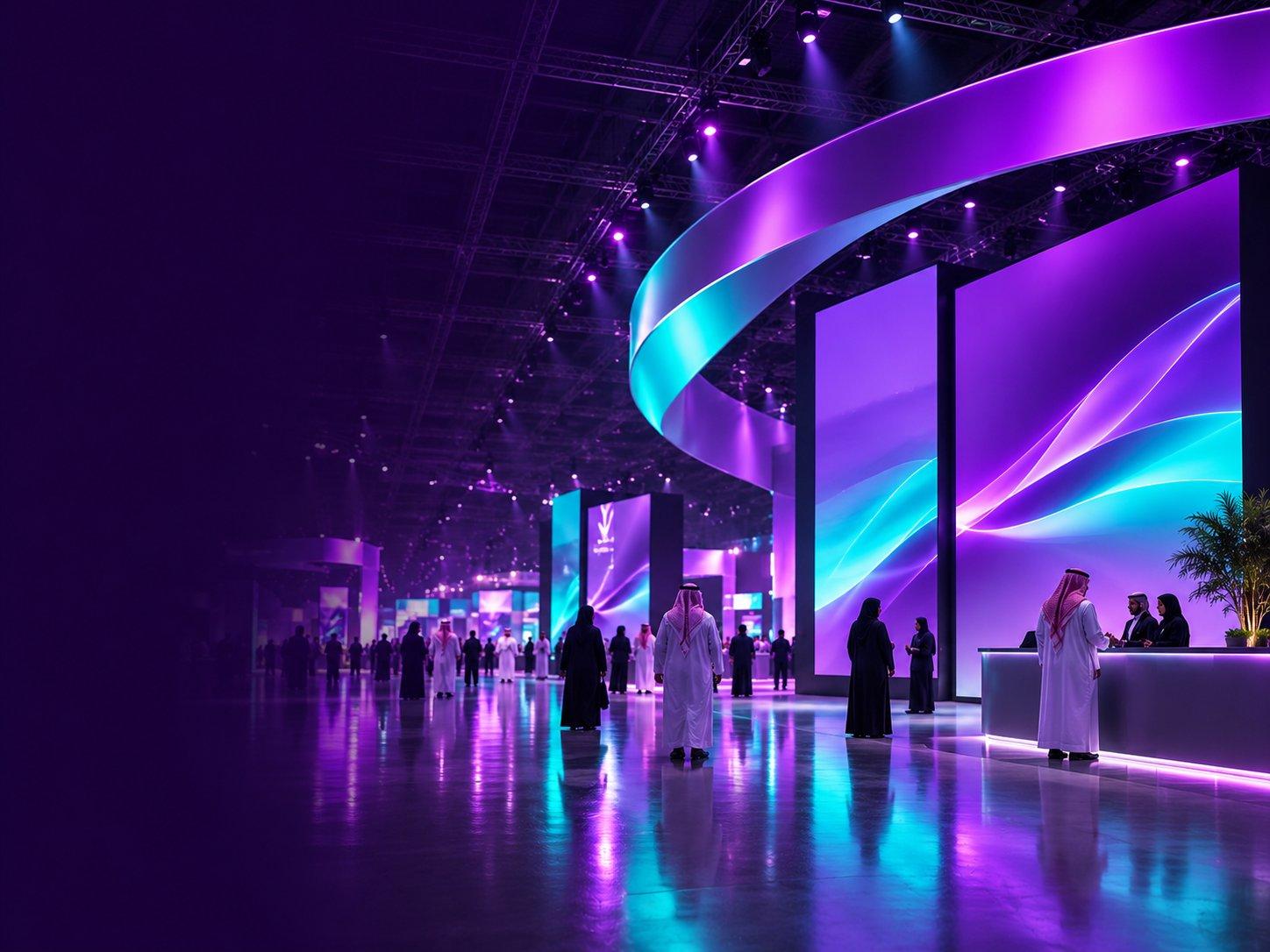
Visitors decide whether to approach a stand within seconds, often from across the hall. Clear sightlines, a strong visual focal point, bold brand presence and well-placed lighting all help the stand stand out without overwhelming.
A single clear message, readable from a distance, works far better than walls filled with text. The details can come later, once the visitor has stepped closer.
03 · JOURNEYDesign the visitor's path.
Great exhibition spaces are designed as journeys. They consider where visitors enter, what they see first, where they pause and how they leave. A thoughtful flow avoids crowding, guides people naturally through the story and creates space for conversations with the team.
People may forget what they read on a stand. They remember what they experienced inside it.
— — Intro Media
04 · STORYTurn information into an experience.
An exhibition is a chance to tell a story in three dimensions. Content can be layered so that every visitor finds the right depth: a headline that anyone can understand at a glance, visual displays for those who want more, and detailed material or guided demonstrations for those who are most interested.

Technology can enrich this story — immersive screens, interactive displays, projection and sound — but it works best when it serves the message rather than replacing it. The question to ask is always: does this help the visitor understand or feel something?
05 · DETAILCraft is in the details.
Materials, finishes, lighting temperature, seating, signage in both Arabic and English, and even the way brochures are presented all shape how visitors perceive a brand. Small details signal care, and care builds trust.
Equally important is the human side: a well-briefed team, clear roles on the stand and a simple way to capture visitor details make sure the conversations started at the event can continue afterwards.
06 · AFTERWARDExtend the experience beyond the event.
The experience does not have to end when the exhibition closes. Professional photography and video documentation, social media coverage during the event and timely follow-up with the people met on the stand all extend its value — and provide useful insight for the next one.
KEY TAKEAWAYS
- Define a clear objective before designing the space.
- Make the stand recognisable and inviting from a distance.
- Plan the visitor journey from entry to exit.
- Layer content so every visitor finds the right depth.
- Use technology to serve the story, not replace it.
- Document the event and follow up promptly.
At Intro Media, exhibitions and events are one of our core services — from concept and spatial design to content, production and on-site coverage. If you are preparing for an exhibition or event, we would be glad to help you design an experience your visitors will remember.

Intro Media is a Saudi creative and media company based in Riyadh, providing integrated solutions across strategic communication, content creation, visual identity, media production, digital marketing, campaigns, and creative experiences.